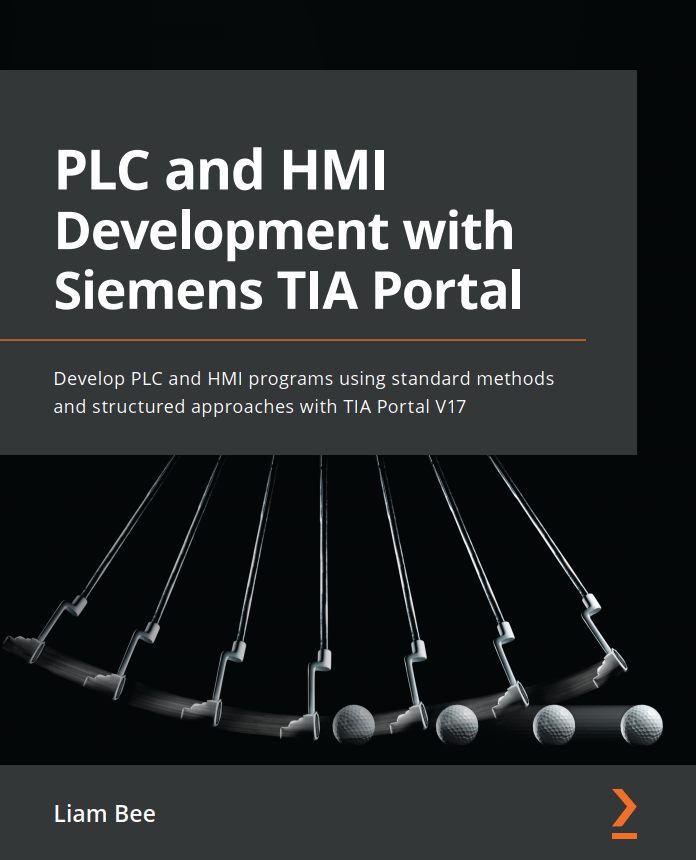

PLC and HMI Development with Siemens TIA Portal
Learn how to structure TIA Portal projects from start to finish using standard methods, reusable code, and Asset Oriented Programming principles. Covers PLC development, HMI design with Unified, and everything in between.
Key Features
Boost Productivity
Learn how to use TIA Portal effectively and make the most of the tools available in the development environment.
Structured Design Patterns
Understand a structured design approach and why it is so powerful when implemented correctly across projects.
Reusable, Maintainable Code
Discover efficient project management and design practices that enable genuine code reuse and library management.
About the Book
With automation requirements on the rise, Siemens’ TIA Portal development environment is almost a necessity for any automation engineer. The Totally Integrated Automation environment helps seamlessly integrate all things automation, from PLC hardware and software design to HMI development. This book helps you understand the tools available in the TIA toolbox and shows you how to write code effectively.
The book begins by introducing you to the TIA environment, covering the layout and tools available. Once you have got to grips with the environment, you will find out how to create hardware to write programs against, including adding IO modules and assigning memory for input and output.
Next, you will develop logic in all of the languages that TIA Portal offers, including Ladder, Function Block Diagram, and Structured Text (SCL), as well as the newest language, Cause and Effect (CEM). You will also discover how to store standard code in libraries, creating a version control system that is easy to manage and aids standard design.
Finally, following the PLC design chapters, you will learn how to develop HMI applications in TIA Portal’s latest Unified hardware.
📌 Version Compatibility
Written for TIA Portal V17, but highly relevant for V18, V19, and V20
While this book uses TIA Portal V17 for all examples and screenshots, the core principles, structured programming techniques, and Asset Oriented Programming methodologies remain virtually unchanged across subsequent versions. The fundamental architecture of TIA Portal (how you structure projects, create reusable code blocks, design UDTs, and develop HMI applications) has remained remarkably consistent from V17 through to V20.
What you’ll learn in this book forms the foundation of professional TIA Portal development regardless of version. The structured approaches, library management techniques, and design patterns covered here are timeless skills that apply directly to the latest releases. While newer versions introduce additional features and refinements, they build upon (rather than replace) the core functionality detailed in this book.
Whether you’re working with V17, V18, V19, or V20, the knowledge and methods presented here will serve you well throughout your automation engineering career.
What You Will Learn
- Set up a Siemens environment with TIA Portal from scratch
- Structure a project for long-term maintainability and reuse
- Simulate projects and enhance simulation further with structured approaches
- Develop HMI screens that interact with PLC data using Unified
- Make the best use of all available programming languages
- Leverage TIA Portal’s tools to manage deployment and modification of projects
Table of Contents
Who This Book Is For
This book is for anybody looking to learn PLC and HMI development using the latest Siemens development platform. Industrial software engineers, PLC engineers, automation engineers, and electricians will all be able to advance their skill set with this guide.
A basic understanding of PLC principles such as data types and basic objects like function blocks and functions is helpful to get started, but the structured approach covered in the book benefits engineers at all levels of experience.
Want Hands-On Help With TIA Portal?
If you have read the book and want to take your development further, I offer consulting services covering Asset Oriented Programming, project architecture, code review, and team training.