Skip to content

PLC Automation Consultancy & Training | Liam Bee

Learn PLC automation properly, through structured courses, deep technical guides, and industrial consultancy.
  • All Posts
  • βš™οΈTechnical Services
  • Siemens TIA Portal Book
  • Do & Grow Siemens Membership
    • View Do & Grow Membership
    • Getting Started With Do & Grow
  • Courses
    • View All Courses
  • Membership Account
    • Sign In
    • Dashboard
    • My Courses
    • My Grades
    • My Memberships
    • My Achievements
    • My Certificates
    • Notifications
    • Edit Account
    • Redeem a Voucher
    • Order History

Automation

  • Siemens TIA Portal – Using Project And Global Libraries

    Siemens TIA Portal – Using Project And Global Libraries

    Liam (Site Owner) Liam (Site Owner)

    Difficulty: πŸ”΄β­•β­•β­•β­•

    Number of lessons: 12

  • CODESYS PLC Course – Structured Programming With DUTs

    CODESYS PLC Course – Structured Programming With DUTs

    Liam (Site Owner) Liam (Site Owner)

    Estimated Time: 4 Hours

    Difficulty: πŸ”΄πŸ”΄β­•β­•β­•

    Number of lessons: 29

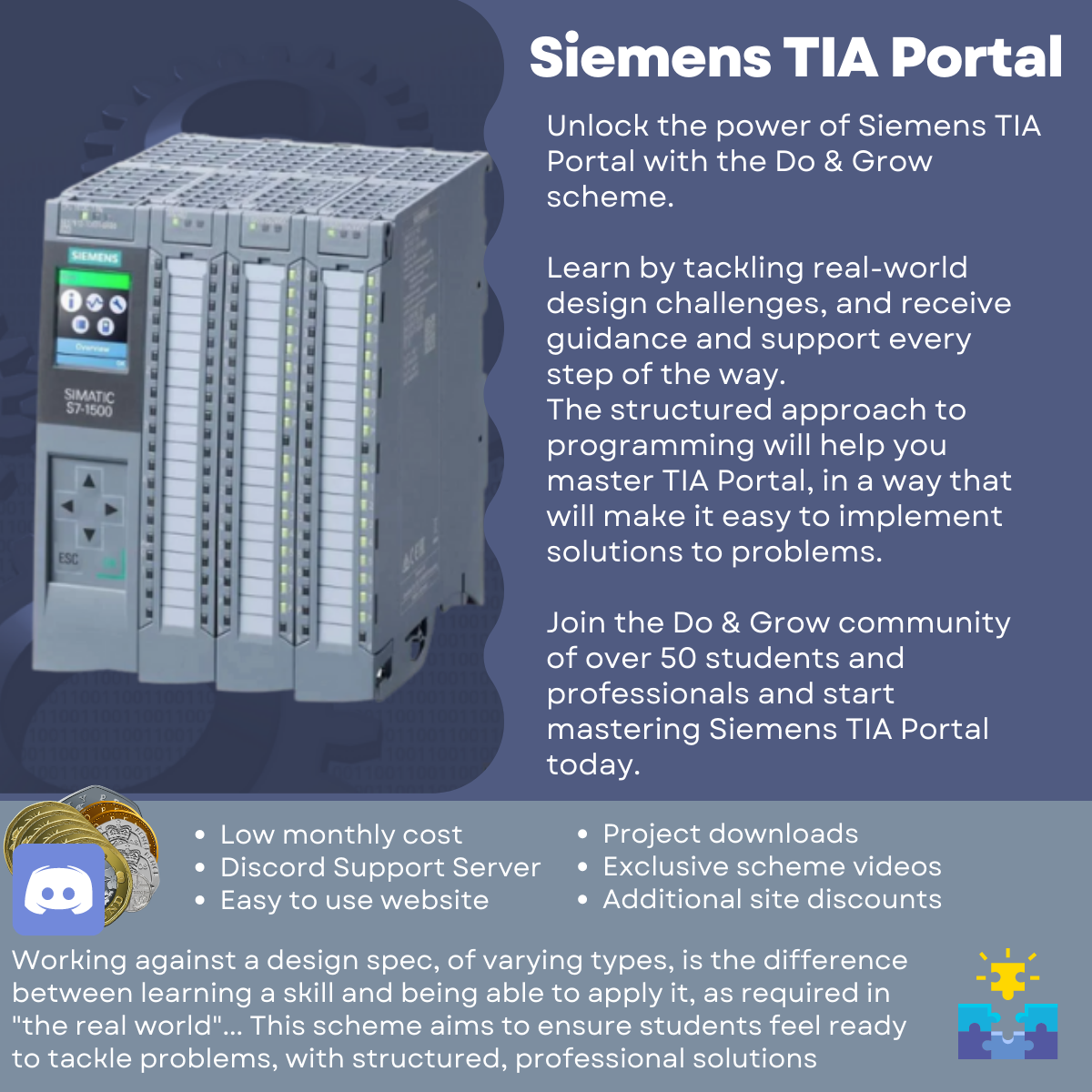
  • Do & Grow – Siemens

    Do & Grow – Siemens

    Liam (Site Owner) Liam (Site Owner)

    Difficulty: Supported By Tutor, πŸ”΄πŸ”΄πŸ”΄πŸ”΄β­•

    Number of lessons: 82

Consulting Services

Member Benefit

Browse Ad-Free

Do & Grow members never see advertisements while logged in. Just learning, courses, and engineering content, distraction free.


Unlock Ad-Free Access
Free 30-Min Call

Book a Quick Discussion

Check the Technical Services page first, but if your project does not quite fit, or you are not sure what you need yet, you can book a discussion here.

General Discussion Banner
Not displaying nicely?

Latest YouTube Content

Want to take this course ad free and have access to the full course immediately?
Take a look here:
https://liambee.me/course/siemens-tia-portal-asset-oriented-programming/

In this lesson we introduce the device control layer and explain how it is used to control physical devices in a clean and structured way.

The device control layer sits alongside interlocks as a dedicated management layer. It uses a UDT that contains control interfaces for each device type rather than raw signals. This allows sequences and higher level logic to control devices consistently without directly interacting with asset managers or global data.

The lesson walks through the structure of the device control UDT and explains how different device types expose different control parameters. Quarter turn valves only require auto enable control while modulating valves also require requested position fail position and no control position.

Key topics covered in this lesson include

The purpose of the device control layer
Why device control is separated from asset data and interlocks
Using a UDT to group device control interfaces
Differences between quarter turn valve and modulating valve control
Why some parameters are fixed and others are configurable at runtime
How requested position fail position and no control position are used
Passing the device control layer through interfaces
Preparing the control structure for use in sequence logic

The lesson also explains why device managers should ideally accept the device control layer through inout interfaces. This ensures future changes to control requirements can be made centrally without breaking existing logic.

By the end of this lesson you will understand how the device control layer provides a clean and scalable way to issue control requests to devices from sequences without accessing global data or embedding device logic directly in sequence code.

#AlwaysLearning #Siemens #TIAPortal #Automation #PLC #HMI #TIA #DoAndGrow
Siemens TIA Portal – Asset Oriented Programming - Creating Control Layer
Subscribe

Latest Tip

TIA Portal treats communication functions as logic TIA Portal treats communication functions as logic elements rather than external configuration tools. Communication instructions are inserted directly into blocks using the same workflow as standard logic, which reinforces that data exchange is part of the control program itself.

S7 communication, open user communication, OPC UA, and web related instructions all appear based on the active editor and device capability. Their visibility depends on whether the selected CPU supports the protocol and whether the project context allows insertion at that moment.

Modbus is also integrated into TIA Portal but placed under a general category rather than a dedicated folder. This placement often leads engineers to believe Modbus is missing when in reality the context simply does not expose it yet.

Once this structure is understood, communication stops feeling like a separate engineering task and instead becomes a natural extension of PLC logic design.

Watch more about this in The Complete Guide To TIA Portal V20 on YouTube: https://www.youtube.com/watch?v=pXX8jD81m_U

#AlwaysLearning #Siemens #TIAPortal #Automation #PLC #HMI #DoAndGrow

Featured Courses

πŸ”ΉThe Complete Guide To Siemens TIA Portal V20πŸ”Ή

--> In Active Development <--
⭐ Included In Do & Grow ⭐

Learn all there is to learn about Siemens TIA Portal V20

πŸ”ΈSIEMENS TIA PORTAL
ASSET ORIENTED PROGRAMMINGπŸ”Έ

Take a look at the biggest TIA Portal Course in AOP Design!

➑️ Find Out More

Most Viewed Post
  1. TIA Portal – TON / TOF / TP Timers And Different Use Cases (15,703)

You missed

Siemens

How to Use the FILL Instruction in Siemens TIA Portal

May 14, 2026 Liam (Site Owner)
Node-RED

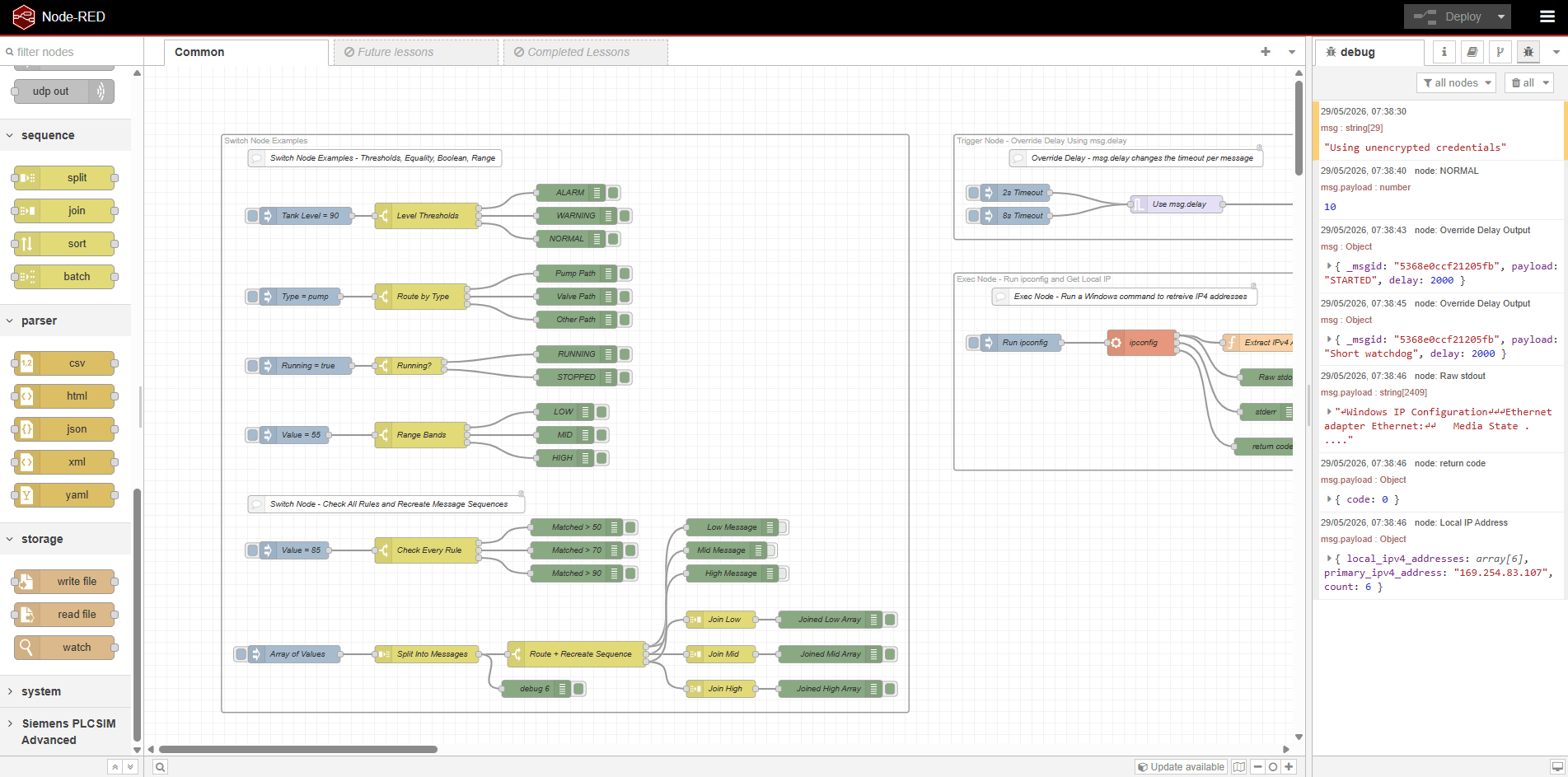
Connecting Node-RED To PLCSIM Advanced

May 12, 2026 Liam (Site Owner)
Siemens Siemens Q&A

Siemens TIA Portal – Q&A Podcast – Episode 15

April 15, 2026 Liam (Site Owner)
Siemens Siemens Q&A

Siemens TIA Portal – Q&A Podcast – Episode 14

April 8, 2026 Liam (Site Owner)

PLC Automation Consultancy & Training | Liam Bee

Learn PLC automation properly, through structured courses, deep technical guides, and industrial consultancy.

Proudly powered by WordPress | Theme: Newsup by Themeansar.

  • Privacy Policy
  • Powered By Icons8
×